Project
Wine Decoded
A WooCommerce store and custom wine search for a catalogue of nearly 2,000 bottles
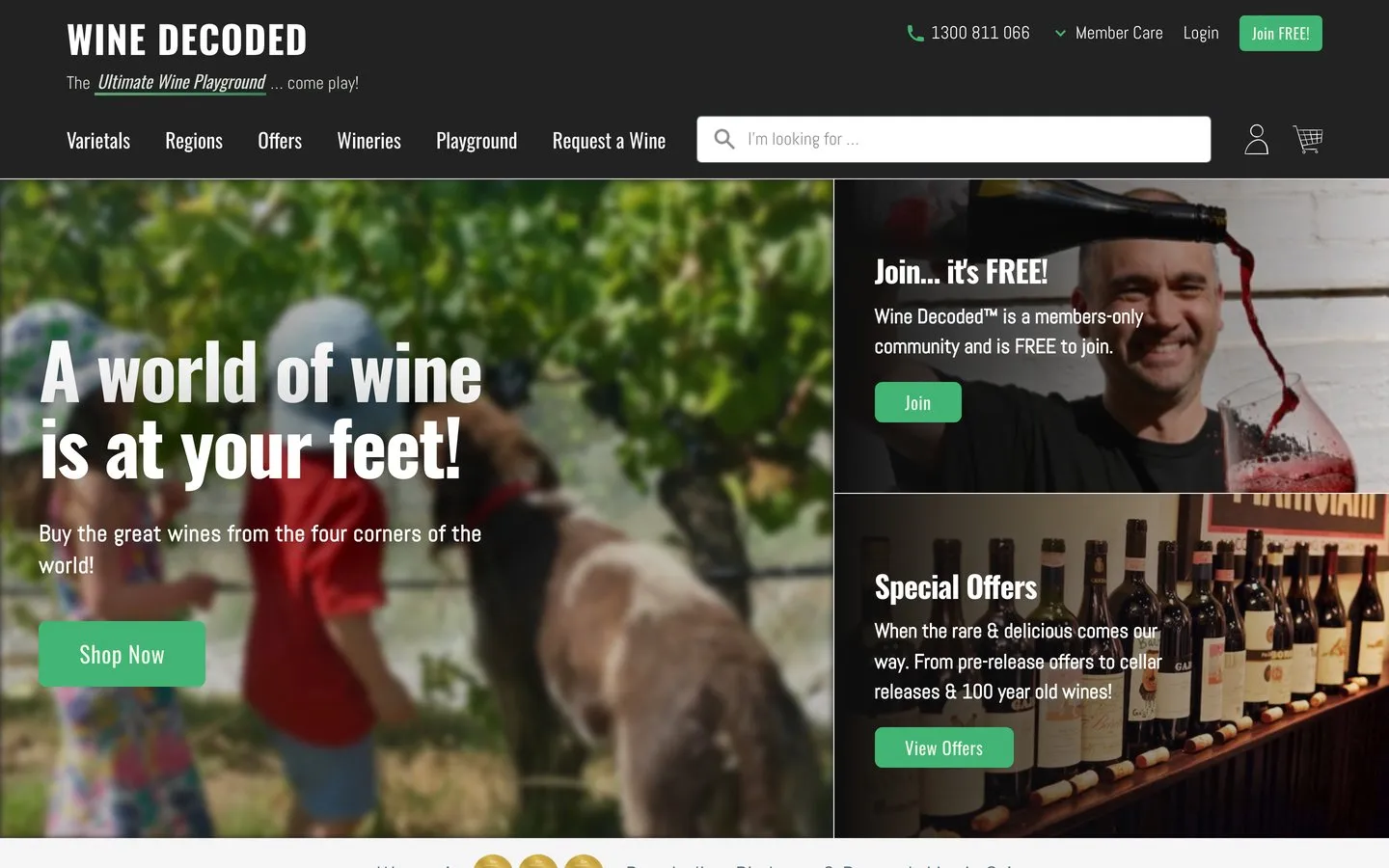
Wine Decoded is a Melbourne wine business run by Paul Kaan, a winemaker who studied at Roseworthy and made wine in the Yarra Valley, Margaret River, Burgundy and Champagne before turning to retail. It sells wine from around the world through a members-only community that is free to join, and it is a shop, a magazine and a wine school in the one site. I have looked after that site since 2019.
Project Scope
- Online store design and build
- Wine search and filtering
- Case and offer pricing
- Listings on wine comparison sites
- Hosting and site care
- Ongoing development
The challenge
A wine list this size is a browsing problem before it is anything else. There are close to 1,900 wines in stock at any one time, from more than 300 producers across more than 200 regions, and hardly any of it is the sort of thing a shopper recognises on sight. Someone after a Nebbiolo from Piedmont under a certain price has a very specific question in mind. A category page listing 1,241 red wines does not answer it, and neither does a search box that only matches words in the title.
The second problem is quieter. This store is the business rather than a brochure for it, so it cannot stop taking orders. Hosting, updates, backups and the speed of the response when something breaks matter every bit as much as the design does.
What I built
A WooCommerce store built from the ground up rather than assembled from a template, with a search and filter system written for the way people shop for wine rather than the way shop software assumes they do.
Filters built around wine
Seven ways to narrow the list: variety, region, vintage, producer, price, bottle size and closure. The wines and the count change the moment a choice is made, and every choice stays on screen so any one of them can be undone without starting over.
Regions the way wine is organised
A customer who knows only that they want something Italian can browse their way down to Barolo. One who already knows they want Barolo gets there in two clicks. The menus, the filters and the links on every wine all follow the same map, so nobody gets lost between them.
Case pricing shown up front
Buying three or six of something costs less per bottle, and the customer sees that before anything goes in the cart rather than as a surprise at checkout. A new offer is set once and applies itself across the range, instead of someone retyping prices on hundreds of wines.
Listed where wine buyers already look
The whole range appears on Wine-Searcher, the comparison site serious buyers use to hunt down a particular bottle, and it updates itself every day without anyone lifting a finger. It puts the store in front of people searching for the wine rather than for a shop.
Across the site
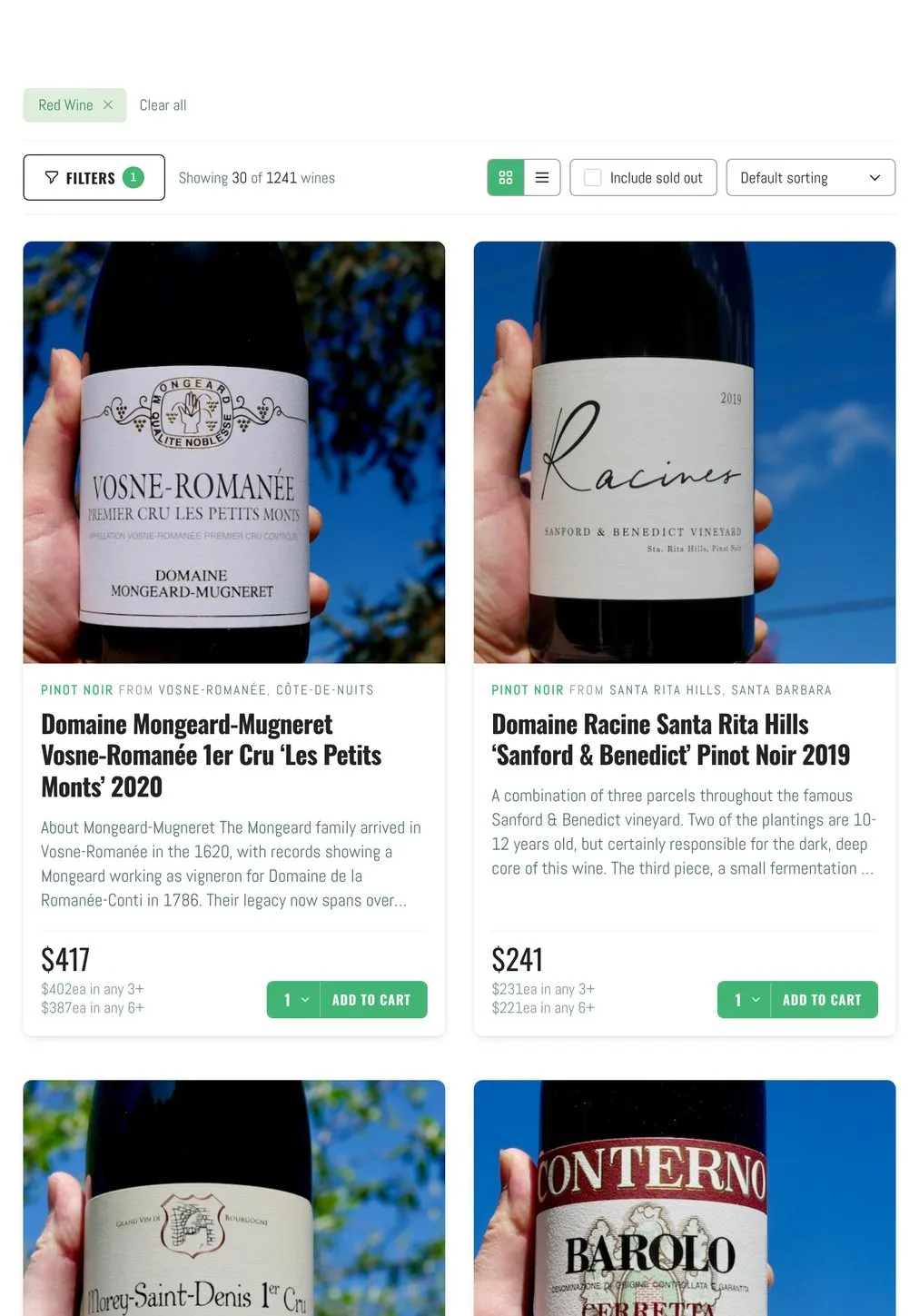
The wine list, filtered and counted live
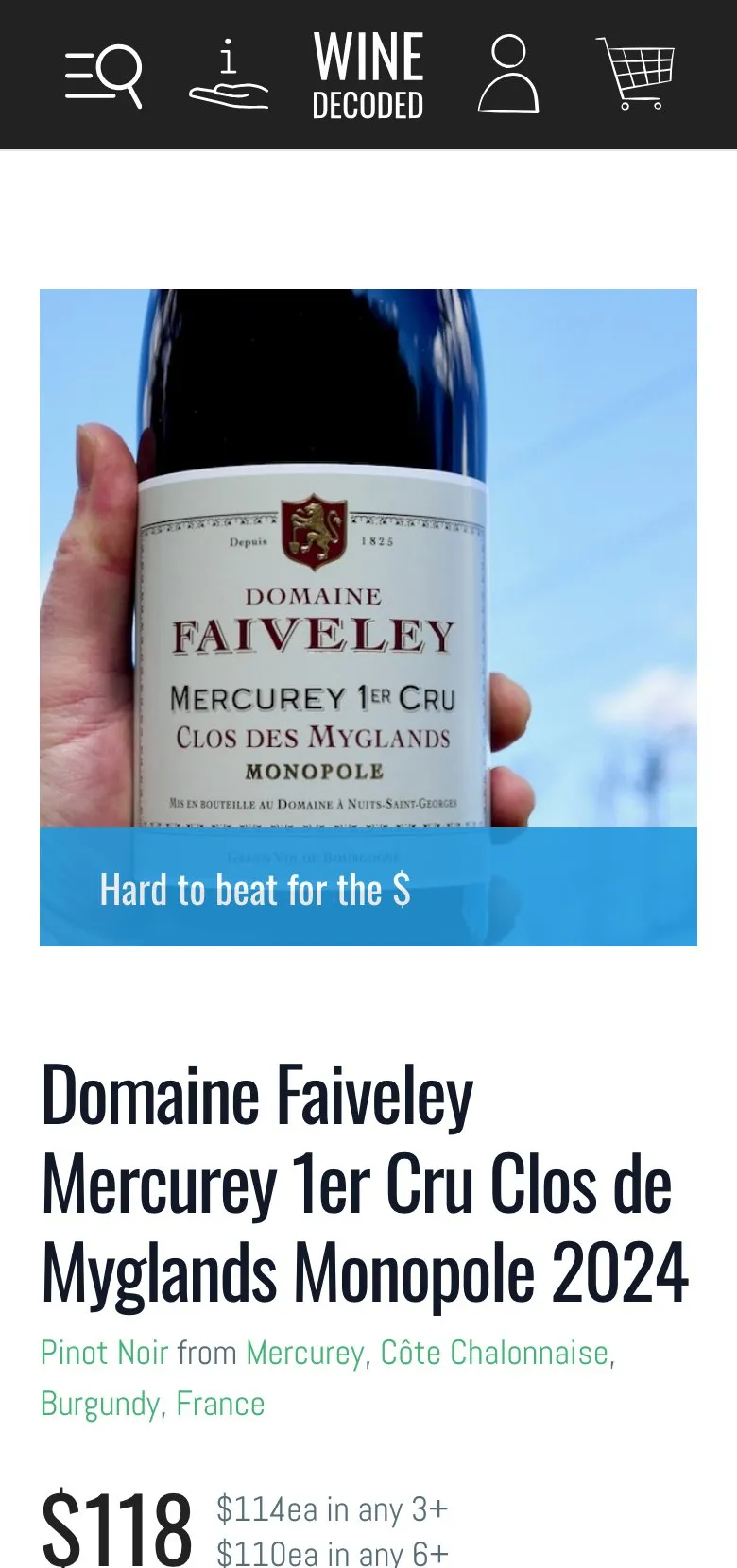
A single wine on a phone
The result
The new search went live in July 2026 and has been tuned since against what members actually do with it, not what anyone assumed they would. Every search and every filter is measured, so each round of changes starts from evidence rather than someone's hunch.
The store also moved to hosting of its own in 2025, so it no longer shares its resources with anybody else's website, and it is backed up, secured and watched around the clock. A customer never sees any of that, which is rather the point. The difference between a shop that feels quick and one that feels tired is usually something nobody sees.
If you sell online and your catalogue has outgrown what the shop software does on its own, that is the work I do. See how I approach WooCommerce development and WordPress hosting and maintenance, read about the MDT DESIGN jewellery store, or get in touch.
Common questions about this project
By letting people search the way they already think about wine: grape variety, region, vintage, producer, price, bottle size and closure. Every choice narrows the list straight away, the choices already made stay on screen so any one of them can be undone, and the number of wines left updates as you go. A shopper gets from 1,900 bottles to a shortlist in a few taps.
Yes, but the browsing is the part that needs proper thought. Taking orders and payments for two thousand products is the easy half. Letting a customer sift those two thousand products seven different ways without the page slowing to a crawl is the hard half, and it is a build decision rather than something you get by installing more software.
Because ready made filters assume every product is like every other product, and wine is not. A customer might know only that they want something Italian, or know exactly which village they want it from. The price they will spend is a range, not a bracket. Bend a generic tool into that shape and you end up with something slower and harder to change than the thing you actually needed.
It gets looked after rather than left alone. My job is that the shop stays quick, stays open, stays safe, and keeps getting the new work the business asks for. When something does go wrong, it is my phone that rings, not the client working out who to call. For a shop taking orders every day of the week, that is not an optional extra.
Yes. I am based in Geelong, about an hour from Melbourne, and work with clients across Australia. Retail eCommerce suits the way I work because the website is the shopfront, so every change to it shows up in the numbers.
Since 2019. The store has been rebuilt, extended and moved house a few times over those years, and the search and filter work is the most recent large piece of it. A relationship that long is worth mentioning, because it is the real test of a build: not whether it launched, but whether it was still a good decision seven years later.